
Unlocking the Adaptive Advantage of Connectivity Solutions in the Modern World: Empowering the Retail Industry with Cutting-Edge Telecom Technologies
In today’s increasingly globalized and interconnected world, businesses must harness technology to meet the demands of modern operations. The retail industry, a sector characterized by its fast pace, competitiveness, and global reach, has seen remarkable advancements in how companies manage their communication and network systems. In particular, telecom technologies such as Dedicated Internet Access (DIA), Software-Defined Wide Area Networking (SD-WAN), and Software-Defined Networking (SDN) have become key enablers of reliable, scalable, and high-performance connectivity solutions for retail giants. These technologies ensure that retailers can efficiently connect their global offices, manage supply chains, provide a seamless customer experience, and maintain operations in a cost-effective manner.
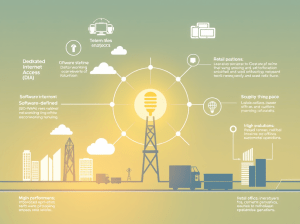
For retail companies that operate across multiple geographies, reliable connectivity is critical. Retailers need a strong communication backbone to support everything from point-of-sale systems to cloud-based applications, to managing global logistics and distribution channels. This is where innovative telecom solutions such as DIA, SD-WAN, and SDN come into play, helping companies adapt to the modern business landscape and stay competitive.
The Role of Connectivity in the Retail Industry
Retail is no longer just about physical stores or a local customer base. With the proliferation of e-commerce, global supply chains, and digitally empowered consumers, retailers need to operate in a highly integrated, efficient, and technologically advanced environment. The retail sector demands seamless connectivity for real-time data sharing, supply chain management, and delivering personalized customer experiences across various touchpoints—both physical and digital.
Retailers operate with vast networks of stores, distribution centers, fulfillment centers, and customer service units spread across various regions, making it essential for them to ensure that their operations are connected in a way that guarantees efficiency, reliability, and performance. With the rise of cloud computing, big data analytics, and mobile retail solutions, traditional networks often fall short in meeting the needs of a fast-paced retail environment. This is why connectivity solutions like DIA, SD-WAN, and SDN have become fundamental for businesses in the retail space.
Dedicated Internet Access (DIA): The Foundation of Reliable Connectivity
Unlocking the Adaptive Advantage of Connectivity Solutions in the Modern World: Empowering the Retail Industry with Cutting-Edge Telecom Technologies
In today’s increasingly globalized and interconnected world, businesses must harness technology to meet the demands of modern operations. The retail industry, a sector characterized by its fast pace, competitiveness, and global reach, has seen remarkable advancements in how companies manage their communication and network systems. In particular, telecom technologies such as Dedicated Internet Access (DIA), Software-Defined Wide Area Networking (SD-WAN), and Software-Defined Networking (SDN) have become key enablers of reliable, scalable, and high-performance connectivity solutions for retail giants. These technologies ensure that retailers can efficiently connect their global offices, manage supply chains, provide a seamless customer experience, and maintain operations in a cost-effective manner.
For retail companies that operate across multiple geographies, reliable connectivity is critical. Retailers need a strong communication backbone to support everything from point-of-sale systems to cloud-based applications, to managing global logistics and distribution channels. This is where innovative telecom solutions such as DIA, SD-WAN, and SDN come into play, helping companies adapt to the modern business landscape and stay competitive.
The Role of Connectivity in the Retail Industry
Retail is no longer just about physical stores or a local customer base. With the proliferation of e-commerce, global supply chains, and digitally empowered consumers, retailers need to operate in a highly integrated, efficient, and technologically advanced environment. The retail sector demands seamless connectivity for real-time data sharing, supply chain management, and delivering personalized customer experiences across various touchpoints—both physical and digital.
Retailers operate with vast networks of stores, distribution centers, fulfillment centers, and customer service units spread across various regions, making it essential for them to ensure that their operations are connected in a way that guarantees efficiency, reliability, and performance. With the rise of cloud computing, big data analytics, and mobile retail solutions, traditional networks often fall short in meeting the needs of a fast-paced retail environment. This is why connectivity solutions like DIA, SD-WAN, and SDN have become fundamental for businesses in the retail space.
Dedicated Internet Access (DIA): The Foundation of Reliable Connectivity
Dedicated Internet Access (DIA) is one of the most important connectivity solutions for retail companies that need consistent and high-performance internet connections. Unlike shared broadband services, which are vulnerable to network congestion and reduced speeds during peak usage hours, DIA provides a dedicated line for businesses. This ensures that retailers get a stable and uninterrupted connection at all times, making it ideal for critical business functions.
For global retailers, DIA is essential for connecting headquarters, stores, warehouses, distribution centers, and customer service teams spread across different locations. Retailers need access to cloud-based applications, video conferencing tools, inventory management systems, and customer relationship management (CRM) platforms. DIA guarantees that all these services are operational without the risk of slowdowns or downtime, ensuring that retailers can serve customers effectively while staying connected to their global operations.
For instance, major retail players often rely on real-time inventory updates, point-of-sale systems, and digital signage in their stores. These systems are highly dependent on fast and reliable internet connectivity. A single moment of downtime in these systems could lead to lost sales, customer dissatisfaction, or supply chain disruptions. Therefore, DIA ensures that retailers can continue to operate smoothly without interruptions that could impact their bottom line.
Moreover, DIA is scalable, meaning that retailers can increase or decrease their bandwidth according to their needs. Whether expanding into new markets or launching new e-commerce platforms, the flexibility of DIA allows retailers to adjust their internet speed to meet evolving business demands, ensuring they remain competitive in a fast-changing retail environment.
Software-Defined Wide Area Network (SD-WAN): Optimizing Connectivity Across Global Networks
As retailers continue to expand their operations across borders, connecting stores, regional offices, and fulfillment centers can become increasingly complex. Traditional wide-area networks (WANs) require expensive, time-consuming manual management and often suffer from performance issues, such as latency, downtime, and limited scalability.
SD-WAN addresses these challenges by offering an intelligent, software-driven approach to network management. SD-WAN enables retailers to optimize the routing of traffic between their global offices and stores, using multiple types of internet connections (such as MPLS, broadband, and 4G/5G) to ensure the most efficient path for different types of traffic. This results in enhanced performance, reduced costs, and improved reliability.
Retailers with multiple locations benefit greatly from SD-WAN because it simplifies network management, improves application performance, and provides better control over their network traffic. For example, SD-WAN can prioritize mission-critical applications such as real-time inventory management and transaction processing, ensuring that these applications perform smoothly even during high-traffic periods.
One of the key advantages of SD-WAN for the retail industry is the ability to leverage broadband internet connections alongside traditional MPLS (Multiprotocol Label Switching) circuits. This allows retailers to reduce their reliance on expensive MPLS circuits while maintaining a high level of security and performance. SD-WAN also enables retailers to quickly deploy new locations and scale their network capacity without requiring costly infrastructure upgrades, making it ideal for retailers with global operations or plans for rapid expansion.
Moreover, SD-WAN provides built-in security features such as end-to-end encryption and secure tunneling, which help protect sensitive data as it moves between stores, distribution centers, and corporate offices. Retailers dealing with customer data, payment information, and inventory data need a robust security infrastructure to prevent breaches and comply with data protection regulations. SD-WAN’s security features offer this peace of mind while simultaneously boosting performance.
Software-Defined Networking (SDN): Creating Agile, Scalable, and Cost-Effective Networks
While SD-WAN focuses on optimizing connectivity across wide areas, Software-Defined Networking (SDN) takes a broader approach to network management. SDN enables retailers to manage their entire network infrastructure centrally and programmatically, offering significant flexibility and efficiency.
SDN abstracts network management from the physical hardware layer, providing retailers with a virtualized and highly programmable network that can be customized based on their specific needs. This flexibility is particularly useful for large-scale retailers who need to rapidly adapt their networks as business requirements evolve. Whether it’s adding new stores, integrating cloud applications, or connecting remote offices, SDN enables retailers to adjust their network infrastructure without the need for major hardware upgrades.
For global retailers, SDN offers several distinct advantages. First, it allows centralized control of networks, which simplifies network operations and reduces the complexity of managing multiple locations across different countries. Retailers can monitor their entire network from a single interface, making it easier to detect issues, perform troubleshooting, and optimize performance.
Second, SDN provides agility by allowing retailers to adjust bandwidth allocation dynamically to meet changing demands. For instance, during high-demand periods like Black Friday or holiday sales, SDN can automatically allocate additional bandwidth to support increased traffic to e-commerce platforms, ensuring a smooth customer experience. Similarly, SDN can prioritize certain applications or services based on their criticality to business operations, ensuring that mission-critical tasks are given the resources they need to perform optimally.
Third, SDN is cost-effective. By abstracting network management from hardware, retailers can reduce capital expenditures on physical equipment and optimize their existing infrastructure. This leads to a more streamlined and efficient network. It can scale up or down as needed without requiring significant investments in hardware.
The Impact of Connectivity Technologies on Retail Operations
The implementation of DIA, SD-WAN, and SDN in the retail sector is transforming the way companies manage their global operations. These connectivity solutions allow retailers to:
- Enhance Customer Experience: Retailers can provide faster, more reliable online and in-store experiences for customers. Advanced connectivity solutions ensure a smooth interaction with customers. This includes seamless payment processing. It also covers personalized marketing and real-time inventory checks at every touchpoint.
- Improve Supply Chain Efficiency: Retailers rely heavily on their supply chain operations. Connectivity solutions like SD-WAN and SDN allow for better real-time monitoring. They enable faster data exchange and provide greater accuracy in inventory management. This helps optimize procurement, shipping, and logistics, reducing lead times and improving profitability.
- Facilitate Digital Transformation: Retailers are increasingly adopting digital technologies such as cloud computing, artificial intelligence, and data analytics. High-quality connectivity is the foundation for enabling these technologies, ensuring smooth data flow and reliable access to cloud-based applications. With DIA and SD-WAN, retailers can adopt new technologies with confidence, knowing their network infrastructure can support these innovations.
- Ensure Business Continuity: Retailers face the risk of disruptions from unforeseen events such as cyberattacks, natural disasters, or system failures. SD-WAN and SDN technologies provide enhanced network resilience and redundancy, helping retailers ensure business continuity even in the face of unexpected challenges.
- Optimize Operational Costs: By leveraging SD-WAN’s ability to optimize traffic across different internet connections and SDN’s ability to manage network resources programmatically, retailers can reduce the total cost of ownership for their network infrastructure. These solutions allow for better control over operational expenses, making it easier for retailers to manage costs while ensuring high-quality service.
Conclusion
As the retail industry continues to evolve in the digital age, the demand for seamless, reliable, and high-performance connectivity will only increase. Telecom technologies like Dedicated Internet Access (DIA), Software-Defined Wide Area Network (SD-WAN), and Software-Defined Networking (SDN) are playing a pivotal role in helping retailers stay competitive by offering solutions that enhance connectivity, performance, and security across their global operations.
By adopting these technologies, retail businesses can connect their offices, stores, and warehouses across different regions, creating a cohesive, agile, and cost-effective network infrastructure that supports business growth, digital transformation, and an exceptional customer experience. These connectivity solutions empower retailers to meet the demands of an ever-changing retail landscape, providing the foundation for future success.
Let’s get connected; if the post is triggered, you.
Shiv, Global Account Manager
Singapore Telecommunication
Linked in – https://www.linkedin.com/in/shivsingtel/
ph-01713355064

 connectivity scope